Beyond the Wedding Day: Why the Most Memorable Celebrations Tell a Story


There are weddings that impress us with their beauty, extraordinary floral arrangements, remarkable venues and thoughtfully designed details. And then there are those celebrations we still think about years later, not necessarily because we remember every individual design element, but because we can still recall exactly how they made us feel.
Perhaps it was the anticipation when the invitation arrived, the feeling of entering the venue for the first time, an unexpected speech during dinner or that one song that suddenly brought everyone together on the dance floor.
What connects these memories is rarely one spectacular detail. More often, it is the relationship between many thoughtfully created moments that together tell a story.
For us, this is where the real art of wedding planning begins. A wedding is not simply a sequence of scheduled events, but an experience with its own rhythm, emotional development and atmosphere that unfolds over several hours or even an entire weekend.
What does storytelling mean in wedding planning?
Wedding storytelling is the process of translating a couple's personal story into a cohesive celebration. It is not about retelling their relationship chronologically or filling every moment with obvious symbolism, but about using their personalities, shared values, memories and wishes as the foundation for the entire experience.
Their story can be reflected in the choice of venue, music, ceremony, design concept, food and the way guests are brought together.
Perhaps a couple's favourite memories involve long summer evenings spent around a table with friends, and they want to recreate that feeling at their wedding. Perhaps they share a passion for art, architecture or music that subtly influences the design. Or perhaps their greatest wish is to bring together families from different countries and cultures in a way that feels natural and welcoming.
Great wedding storytelling does not need to be loud or obvious. Often, its strongest impact comes from creating a celebration that simply feels unmistakably true to the people at its centre.
Why does the wedding experience begin long before the wedding day?
The story of a wedding does not begin with the ceremony. It often starts with the very first communication guests receive.
An invitation does more than communicate the date, time and location. It offers an initial impression of the celebration to come. The wedding website, travel information, local recommendations and the design of a possible welcome event can all become part of a cohesive experience.
This is particularly important for destination weddings and multi day wedding weekends, where guests often invest considerable time, money and effort to attend.
When information is communicated clearly, travel arrangements are thoughtfully considered and guests feel welcomed from the beginning, it creates a relaxed foundation for the entire celebration.
Not every element needs to be elaborate or highly produced. What matters is that it reflects the character of the wedding and builds anticipation without overwhelming guests with unnecessary information.
The dramaturgy of a wedding: Why a timeline is more than a schedule
A timeline is one of the most important tools in professional wedding planning, but its purpose goes far beyond organisational coordination.
Of course, suppliers need to know when to arrive, the ceremony needs a defined start time and sufficient time must be allocated for dinner, speeches and the transition into the party. At the same time, the order of these moments directly influences how a celebration feels.
An emotional moment needs space to unfold, while an energetic party often benefits from anticipation that has been building naturally throughout the evening.
Intentional pauses matter just as much, because not every moment needs to be filled with entertainment or another scheduled activity. Sometimes the most beautiful memories happen in between, when guests spontaneously connect, the couple has a moment to breathe or an unexpected conversation unfolds.
Successful wedding storytelling therefore creates a balance between structure and freedom. It gives the day a clear direction without making it feel rigid or overly orchestrated.
What wedding planning and cinematic storytelling have in common
In filmmaking, a moving story is not created through beautiful images alone. It emerges through perspective, rhythm, anticipation, contrast and the intentional decision of when a particular moment should have its greatest impact.
A similar way of thinking influences our work at Momentfest.
With our background in film and creative production, we approach weddings not simply as events that need to be organised, but as experiences in which individual elements are connected.
We consider how guests will perceive a space when they first enter it, how the lighting changes throughout the day, which musical transitions support a particular emotion and how an intimate ceremony can naturally evolve into an extraordinary celebration.
This is not about staging genuine emotions or trying to control spontaneous moments. Quite the opposite. Thoughtful structure should create the freedom for real emotions to happen.
After all, the best stories are the ones that never feel constructed.
How can wedding design tell a personal story?
A bespoke wedding design ideally begins not with a colour palette or a collection of beautiful Pinterest images, but with an understanding of the people being celebrated.
Which places hold special meaning for them? Which materials, colours or atmospheres resonate with their personalities? How do they live, how do they welcome friends into their home and what kind of environment feels natural to them?
These questions can become the starting point for a creative direction that runs throughout the celebration.
This does not mean that every personal memory needs to be translated literally into decoration. Instead, a particular feeling can become the foundation for the design.
A shared love of long dinners might inspire an expansive tablescape with warm lighting and a relaxed, convivial atmosphere. An appreciation for architecture could be reflected in a clean spatial concept and a carefully considered selection of materials.
Florals, textiles, stationery and lighting can also be brought together so that the wedding feels like one cohesive vision rather than a collection of individual trends.
At Momentfest, we see Creative Direction as the process of translating personal stories into a visual and emotional language.
Why guest experience should be part of the story
A wedding is not experienced by the couple alone, but by everyone invited to share that particular moment in their lives.
That is why guest experience is an essential part of thoughtful wedding planning.
How are guests welcomed? Is there enough time for conversations and personal connections? How do the transitions between ceremony, reception, dinner and party feel? And which moments create genuine connections between people who may be meeting for the first time?
A meaningful guest experience does not necessarily require elaborate surprises or spectacular entertainment.
Often, it is the seemingly effortless details that make the greatest difference: a comfortable flow, excellent food, attentive service, a personal ceremony and an atmosphere in which people feel completely at ease.
When these elements work together, guests become more than an audience witnessing a beautiful wedding. They become a living part of its story.
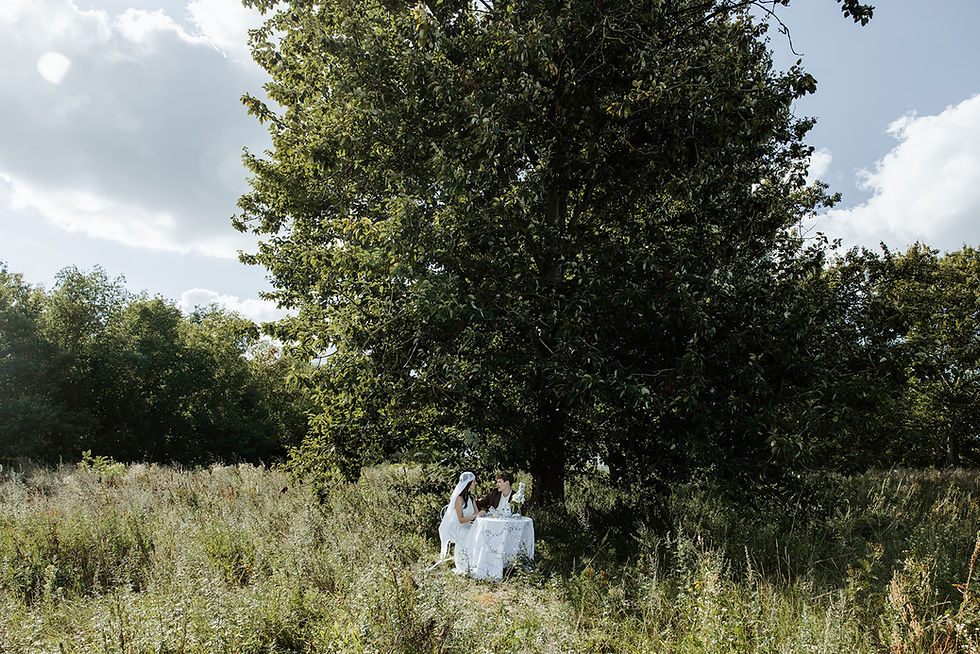
Why wedding weekends offer extraordinary opportunities for storytelling
A multi day wedding weekend creates the opportunity to develop a celebration through different moods, settings and experiences.
While a single wedding day is often intense and filled with emotional highlights, a wedding weekend allows more time for personal connections and intentionally different atmospheres.
A welcome dinner on Friday might be relaxed, lively and informal, giving guests time to arrive and get to know one another. Saturday then becomes the emotional and creative centre of the celebration, while a shared brunch on Sunday offers a quieter and more personal ending.
These three experiences do not need to look identical. In fact, their differences can be exactly what makes the weekend memorable.
What matters is that despite their different atmospheres, they still feel like parts of the same story.
This can be achieved through recurring design elements, thoughtful musical direction, culinary concepts or the intentional selection of different spaces.
A successful wedding weekend is therefore much more than a wedding with additional events. It is one cohesive experience that unfolds over several days.
Does a wedding need an elaborate production to become unforgettable?
Not at all, because a powerful story is not automatically created by a large budget or spectacular production.
Of course, elaborate installations, extraordinary venues and ambitious creative concepts can make remarkable experiences possible. But the important question is whether those elements genuinely contribute to the atmosphere and personality of the celebration.
A personally chosen song can be more emotional than an elaborate performance, a heartfelt speech can remain in people's memories longer than an expensive surprise, and a shared dinner with the most important people in your life can be just as meaningful as a grand celebration.
Professional wedding planning and Creative Direction help identify these priorities and ensure that the available budget is invested intentionally.
The question should therefore not be how to include as many extraordinary elements as possible, but which moments genuinely matter and how to create the right environment for them.
How do you create a wedding that does not feel like everyone else's?
The first step is to move away from the idea that a wedding needs to follow a particular set of expectations.
Not every couple needs a traditional schedule, a certain type of ceremony or the same programme that appears at countless other weddings.
What matters much more is understanding what kind of celebration genuinely reflects the people at its centre.
Perhaps that means a long dinner instead of an extensive entertainment programme, an unexpected venue instead of a traditional ballroom or a ceremony that intentionally involves the people closest to the couple.
Sometimes the most extraordinary ideas emerge when we stop asking what is usually done at weddings and start asking what actually matters to these two people.
A distinctive wedding does not necessarily need to be unconventional. Above all, it needs to feel authentic.
What role do wedding planners and creative direction play in storytelling?
For a personal story to run throughout an entire wedding, creative ideas and organisational decisions need to be considered together from the very beginning.
A Wedding Planner develops the structure, coordinates suppliers, manages the budget and ensures that every element can be executed reliably.
Creative Direction creates the overarching vision and connects design, atmosphere, materials, music and spatial concepts into a cohesive experience.
When these two disciplines work together, the result is a celebration where individual details do not simply look beautiful, but also contribute meaningfully to the overall experience.
At Momentfest, we combine Full Service Wedding Planning with Creative Direction because we believe exceptional weddings require both creative vision and professional execution.
Our background in film and creative production allows us to approach the entire celebration as one connected story while preserving the spontaneity and authenticity of its individual moments.
The most beautiful weddings do not tell a perfect story. They tell yours.
A wedding does not need to look like a film to tell a story.
It does not need to be perfectly choreographed, every moment does not need to be photographed and not every detail needs to carry a deeper symbolic meaning.
Instead, it is about creating an environment where people can connect, emotions can unfold and shared memories can grow.
For us, the most extraordinary weddings are the ones where everything feels naturally connected, from the first impression to the last dance, and where the couple never feels as though they need to play a part, but can simply be themselves.
Because in the end, what remains is not only the memory of a beautiful day.
It is the memory of a story you experienced together with the most important people in your life.
And that story should be unmistakably yours.


Comments